Human-centered systems architecture
Function under load.
Low-capacity systems
for high-priority outcomes.
High Priority designs decision infrastructure, research systems and operational tools that keep essential work moving when human capacity falls.
Explore our systemsYour highest-priority outcomes should not depend on your best day.
See it in practiceCapacity changes.The priority holds.
Attention, energy and judgement change under pressure. The system should carry more of the structure, narrow the choices and keep the essential action within reach.
Load study / A decision brief is due today
Illustrative workflowOther requests
Supporting material
The decision brief
Reduced capacity. The system prepares the material; the person keeps the decision.
Less capacity changes the allocation of work. Human approval remains explicit.
AI workflows · Decision infrastructure · Operational systems
The architecture is shaped around your actual constraints.
Built for theconsequential.
A focused portfolio spanning personal operating systems, public-service navigation and longitudinal research. Each system turns complexity into a clearer human decision.
ExitFramework.
Turning intention
into a next action.
A practical system for people carrying more than willpower can organise. Its Minimum Viable Day tool builds a smaller plan around the capacity available today.
Try Minimum Viable Day (opens in a new tab)A plan that assumes a good day becomes another burden on a difficult one.
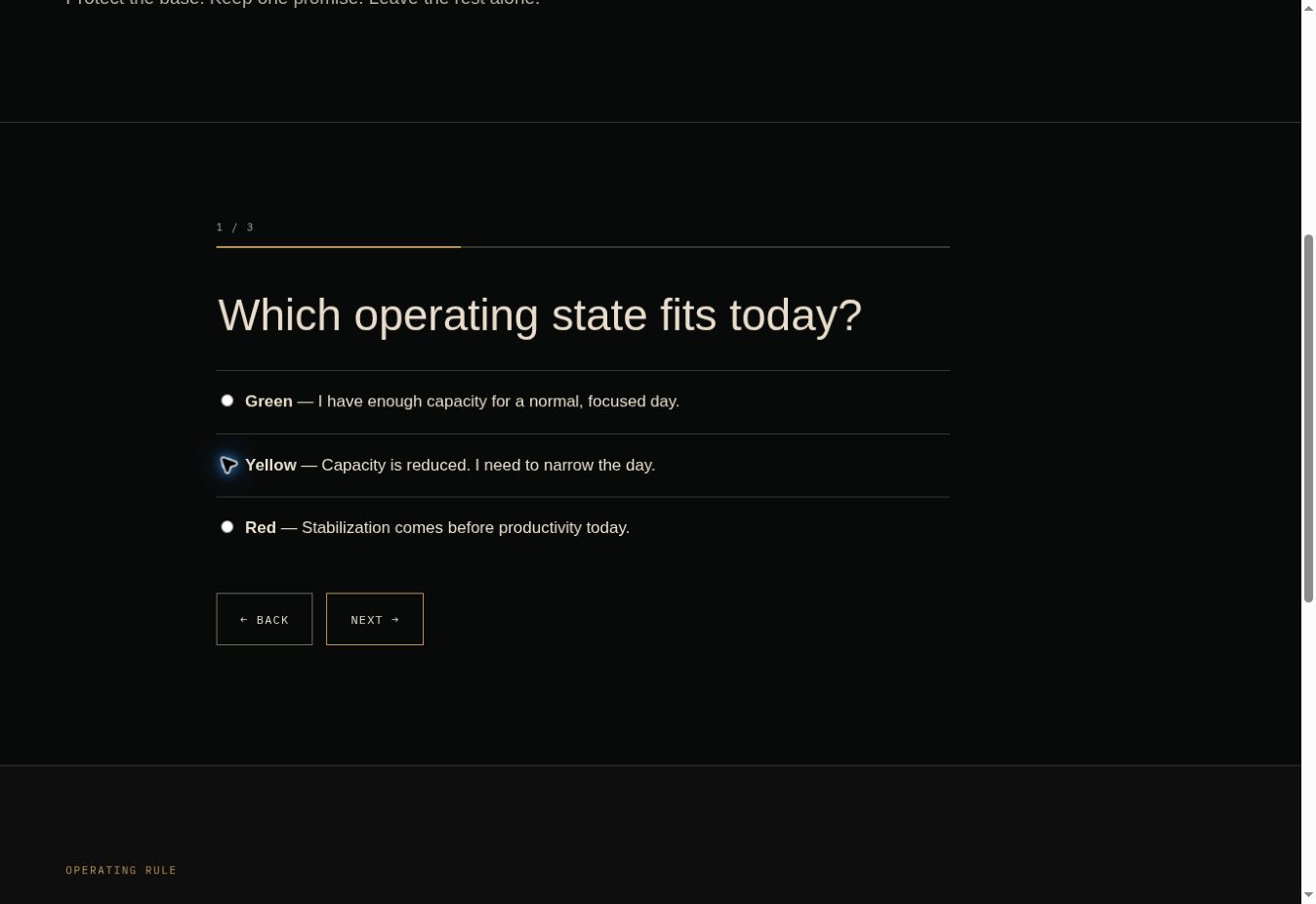
A choice about today's operating state comes before a task list.
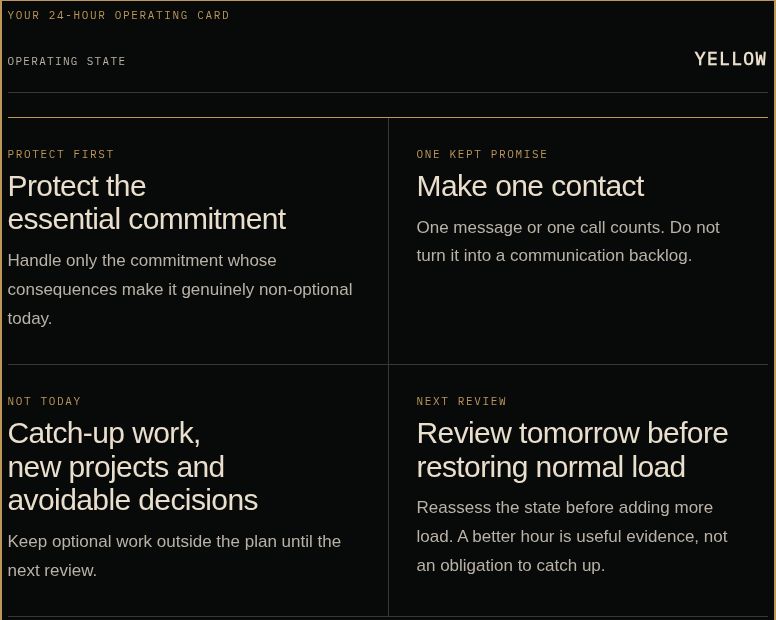
The result protects one promise and holds optional work until the next review.
The user chooses what matters.
The system makes the day smaller.
Your constraints.The right system.
We begin with what must keep working, where the load accumulates and which decisions belong to people. That determines the architecture — from a single workflow to the infrastructure connecting the whole operation.
- Make priority visible.
- Put the relevant context beside the decision.
- Remove work at the source.
- Automate repetition and eliminate unnecessary handoffs.
- Keep people in control.
- Make approvals, exceptions and the next action explicit.
Build the systemthat holds.
Tell us what needs to keep working — and what gets in the way.
Start a conversation hello@highpriority.systems